Want a well-structured wedding program outline? Get to know the step-by-step process of a typical Ghanaian marriage ceremony.
The marriage of two people in love is celebrated with a solemn and joyous ceremony known as a wedding. Over time, wedding customs have changed to reflect the shifting dynamics of civilizations and cultures.
Ghanaian weddings, deeply rooted in tradition, have witnessed a modern transformation, blending ancient customs with contemporary elements.
Planning a wedding is no small feat, and in Ghana, it involves meticulous attention to cultural nuances and family expectations. The wedding program outline is no exception. The perfect wedding program ensures a seamless and memorable experience for everyone involved.
In this article, JanaTribe will explore the perfect Ghanaian wedding program outline, combining the rich cultural heritage of Ghana with the excitement of modern festivities.
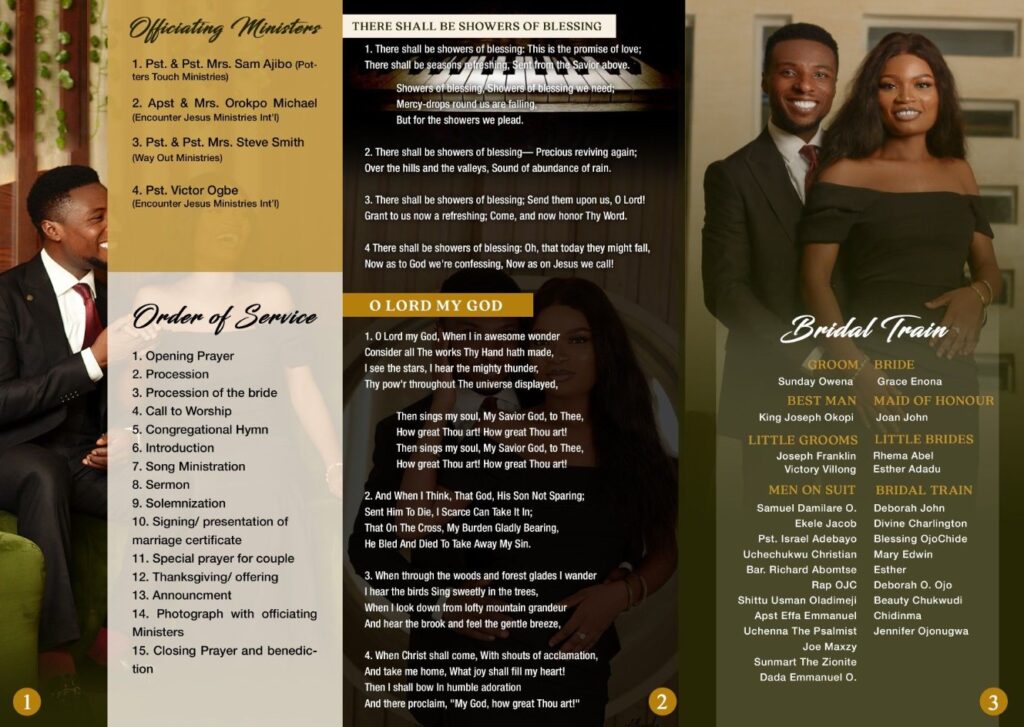
Image Source: Pinterest
Ghana Traditional Wedding Program Outline
What is a wedding program outline? A wedding program outline is a planned schedule that outlines the events that will take place during the ceremony and reception.
It acts as a roadmap for the couple and their guests, guiding them through the various parts of the celebration. Usually, a wedding program includes information about the entrance order, speeches, musical performances, and other significant moments to make sure everything goes according to plan and that everyone knows what to expect, Minted reports.
In addition to guaranteeing that all necessary components, such as vows, ring exchanges, and legal formalities, are included, the outline also incorporates cultural customs, speeches, and entertainment, making the event more cohesive and well-organized and enabling couples to tailor their wedding celebrations to reflect their cultural, religious, or personal preferences.
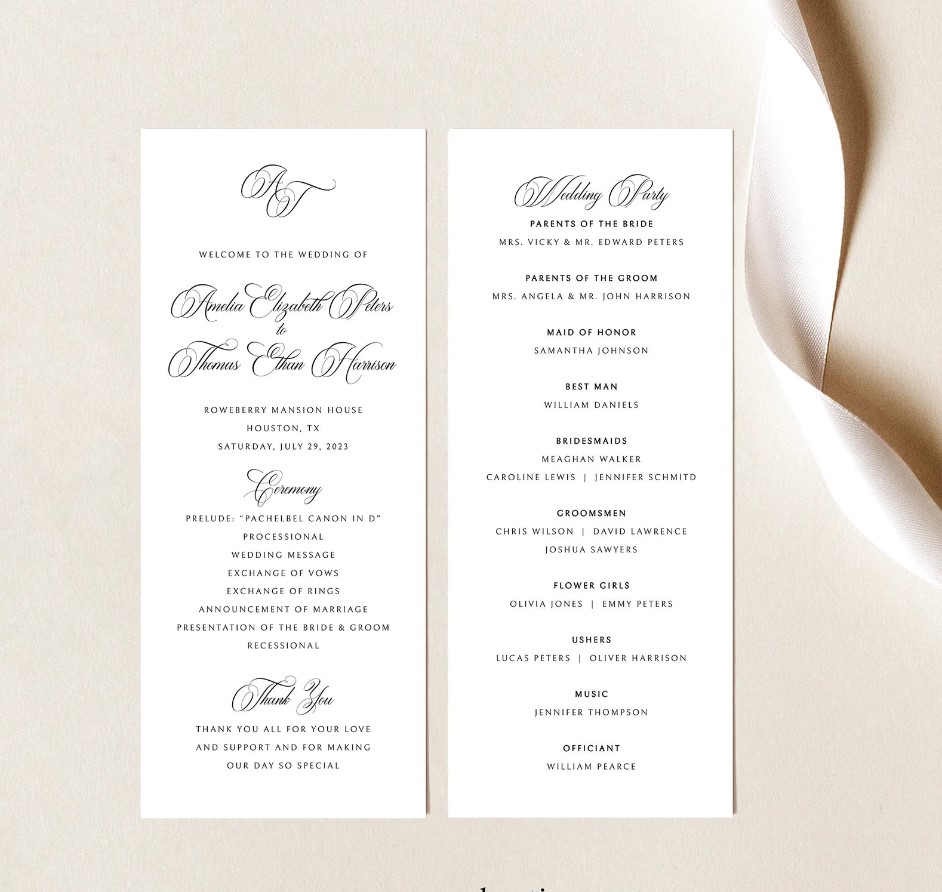
Image Source: Marrymepaperboutique.com
Let's delve into the comprehensive program outline for the ideal Ghanaian wedding:
1. Groom’s Procession
The celebration kicks off with the groom's procession, a vibrant and lively entrance that sets the tone for the festivities. The groom, accompanied by family and friends, makes a grand entrance, showcasing the excitement and anticipation surrounding the union.
2. Introduction and Welcome
The program officially begins with warm welcomes and introductions, bringing together both families and creating a sense of unity. The master of ceremonies (MC) plays a crucial role in establishing a comfortable and inviting atmosphere for the attendees.
3. Opening Prayer/Libations
An introductory prayer or libations to call upon the blessings of the ancestors precede a time of solemnity that helps to establish a sense of continuity and reverence by connecting the ceremony to the couple's cultural and spiritual heritage.
4. Acknowledgments of Families
One of the most important aspects of the program is acknowledging and honoring the couple's families. This can be done by thanking them for their efforts and support of the union, which fosters harmony in the home.
5. Knocking and Dowry Negotiation
The “Knocking Ceremony,, locally known as the “Kokooko,, or the “Opon-akyi bo, is a Ghanaian pre-wedding custom that preludes to the union. Here, the groom, accompanied by his family, visits the bride’s family to formally inform them of their son’s wish to marry their daughter. It serves as an introduction between families.
At this meeting, a dowry or engagement list, which comprises gifts like clothes for the bride, jewelry, money, or other items, is presented to the groom. Also, the “bride price, is negotiated by the families to agree upon the amount to be paid by the groom’s family.
This negotiation is a symbolic gesture, emphasizing the mutual respect and commitment between the two families.
6. Presentation of Dowry/Gifts
Following the conclusion of the dowry discussions, the groom shows the bride's family his thanks and respect by giving them gifts and symbolic objects.
Customarily, the bride’s brothers are also given money, called Akonta Sekan, for protecting their sister.
7. Bride’s Acceptance/Presentation
One symbolic aspect of Ghana weddings is the bride giving her consent three times when asked for her hand in marriage. This is to demonstrate that she’s not been forced into the marriage, and though this dates back many years, modern weddings still participate. The bride is then presented to the groom’s family after her acceptance.
Beautiful in her customs, the bride accepts the groom's proposal, a crucial time of happiness and unification that denotes the approval of the marriage by both families.
8. Traditional Marriage Ceremony , Exchange of Vows and Rings
The traditional marriage ceremony, which combines modern symbolism with tradition, is the focal point of the wedding. It is during this moment that the couple exchanges vows and rings, symbolizing their love and devotion to one another.
9. Family Blessings
After the vows are exchanged, family members bless the newlyweds, wishing them luck, joy, and a peaceful life together.
10. Signing of the Marriage Certificate
The legal aspect of the wedding is formalized with the signing of the marriage certificate. This step ensures that the union is recognized by the law, adding a touch of modernity to the ceremony.
11. Cultural Performances
Cultural performances showcase the diversity and richness of Ghanaian traditions. Dance, music, and other artistic expressions contribute to the festive atmosphere, highlighting the vibrant cultural tapestry of the nation.
Wedding ceremonies in Ghana are known for their colorful music and indigenous dancing. The lively dances, including the Adowa, Kete, Bamaya, Bima, Boborbor, Kpalongo, Agbedza, Patsa, Homowo, Gome, Apatampa, and the like, showcase Ghana’s diverse cultural heritage.
12. Cutting of the Wedding Cake
Cutting the wedding cake together represents the couple's shared delight and sweetness of their new life together. It is an act of symbolic cutting that cuts across cultural borders.
13. Toasts and Speeches
Family and friends can share stories and offer good wishes during toasts and speeches. This part gives the celebration a more intimate feel and fosters a sense of community.
14. Reception , Dancing and Celebration
The couple, now formally united, joins their guests in a joyous celebration of love and companionship during the reception, which is a time for unrestrained celebration complete with dancing, music, and good cheer.
In today's wedding ceremonies, the reception formerly known as the refreshment is not the time for traditional drummers. The lively contemporary songs by some vibrant Ghanaian artists are played mostly at the reception. Guests dance joyfully, fostering a sense of celebration and togetherness.
15. Closing Remarks
The MC or another chosen speaker gives closing remarks as the celebration comes to an end, recapping the day's significance and thanking everyone who helped make the event a success.
16. Closing Prayer
A closing prayer that highlights the sacredness of the union and asks for blessings for the couple's future journey comes to an end in the wedding program.
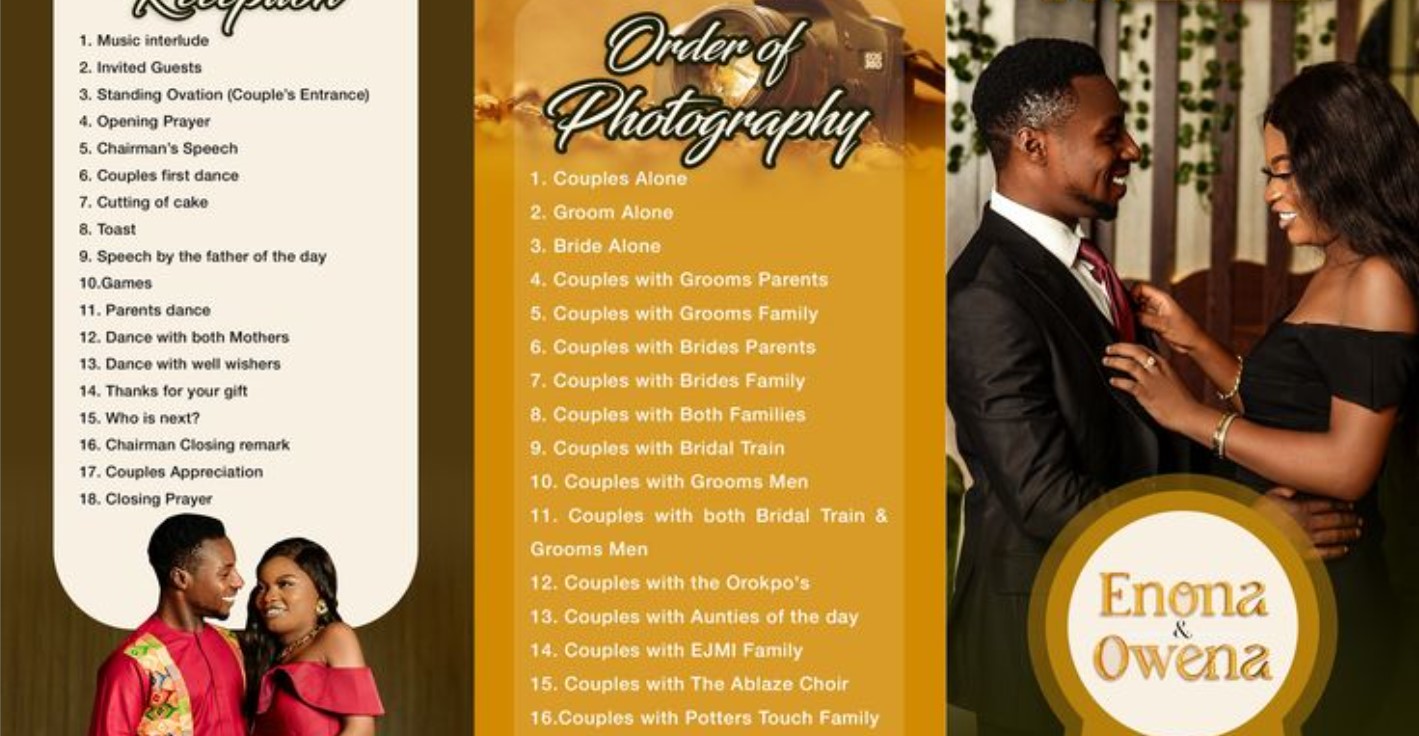
17. Photography Session
The photography session can be strategically placed at various points in the program, such as before or after the ceremony, during the reception, or specific cultural rituals. However, in most cases, it is the last activity.
Hiring a professional photographer and fixing him on your wedding program outline is essential to capture the special moments throughout the celebration.
While the couple might have taken a lot of pictures already because it is their big day, the photography session is the part where they get to take memorable images with their officiating ministers, their bridesmaids, groomsmen, friends, and guests.
Including this in the program ensures that the visual narrative of the wedding is documented comprehensively, enhancing the overall experience for the couple and their guests.
Top 10 Ghanaian Wedding Traditions
Ghanaian traditional weddings involve several traditional customs and ceremonies, including:
- Feasting and Dancing
- A large range of traditional Ghanaian foods and lively music, including the Adowa and Azonto dances, are essential components of any traditional wedding celebration.
- Filing of Marriage Documents
- Following the conclusion of the traditional ceremony, the marriage documents are typically signed.
- Bridal Procession and Entrance
- The bridal entry is a big deal! At the beginning of the wedding ceremony, the bride makes a grand entry into the wedding venue amid color, pomp, and celebration.
- Libation Ceremony
- This is one of the top 10 Ghanaian wedding traditions. It involves pouring out a libation to honor ancestors and seek their favor. The actual pouring of the libation is done by a spiritual leader or elder.
- Traditional Wedding Attire
- The couple will usually dress in Ghanaian traditional wedding attire if they are having a traditional wedding. The Kente cloth is a popular choice for the bride, groom, bridesmaids, and their wedding guests.
- Symbolic Gestures
- Symbolic gestures are carried out during the wedding ceremony to cement the relationship between the two families and to remind the couple of their commitment to each other.
- Traditional Wedding Ceremony
- A traditional wedding ceremony usually consists of a set of stages that must be accomplished before the pair can be pronounced husband and wife. It also includes customs, prayers, and other gestures that strengthen the bond between the bride and groom.
- Exchange of Vows
- Traditionally, the couple pledges their love and devotion to one another at the exchange of vows, which is one of the top 10 Ghanaian wedding customs. This is sealed with a symbolic gesture, such as sharing a cup of palm wine.
- Dowry Payment
- A traditional Ghanaian wedding would not be complete without the custom of the groom giving gifts and cash to the bride's family as a token of his appreciation and his promise to look after her. This is often called the bride price, engagement gift, or dowry.
- The Knocking Ceremony
- On the day of the wedding, the bride's family invites the groom to her house to beg for her hand in marriage. The bride's family ignores him and continues to sing, making him try again until they open the door and the groom sees his bride.
If you attend a traditional wedding in Ghana, be sure that you will see one or two of these top 10 Ghana wedding traditions being practiced!
Conclusion
To sum up, the ideal Ghanaian wedding program seamlessly combines tradition and modernity, honoring the past and welcoming the future with excitement. Every component of the program adds to the richness of the cultural tapestry, making the event unforgettable and joyous for the couple and their loved ones.
Here is a simple program for a Ghanaian traditional wedding that you can refer to.
- Groom’s procession
- Introduction and welcome
- Opening Prayer/ Libations
- Acknowledgments of families
- Knocking and Dowry Negotiation
- Presentation of Dowry/Gifts
- Bride’s Acceptance/ Presentation
- Traditional Marriage Ceremony , Exchange of vows and rings
- Family Blessings
- Signing of the Marriage Certificate
- Cultural Performances
- Cutting of the Wedding Cake
- Toasts and Speeches
- Reception , Dancing and Celebration
- Closing Remarks
- Closing Prayer
- Photography session
For couples looking for free wedding program outline templates, check esty.com. But remember that they come at a cost as low as $4.
Also, check template.net for any PDF of any wedding program outline choice.