
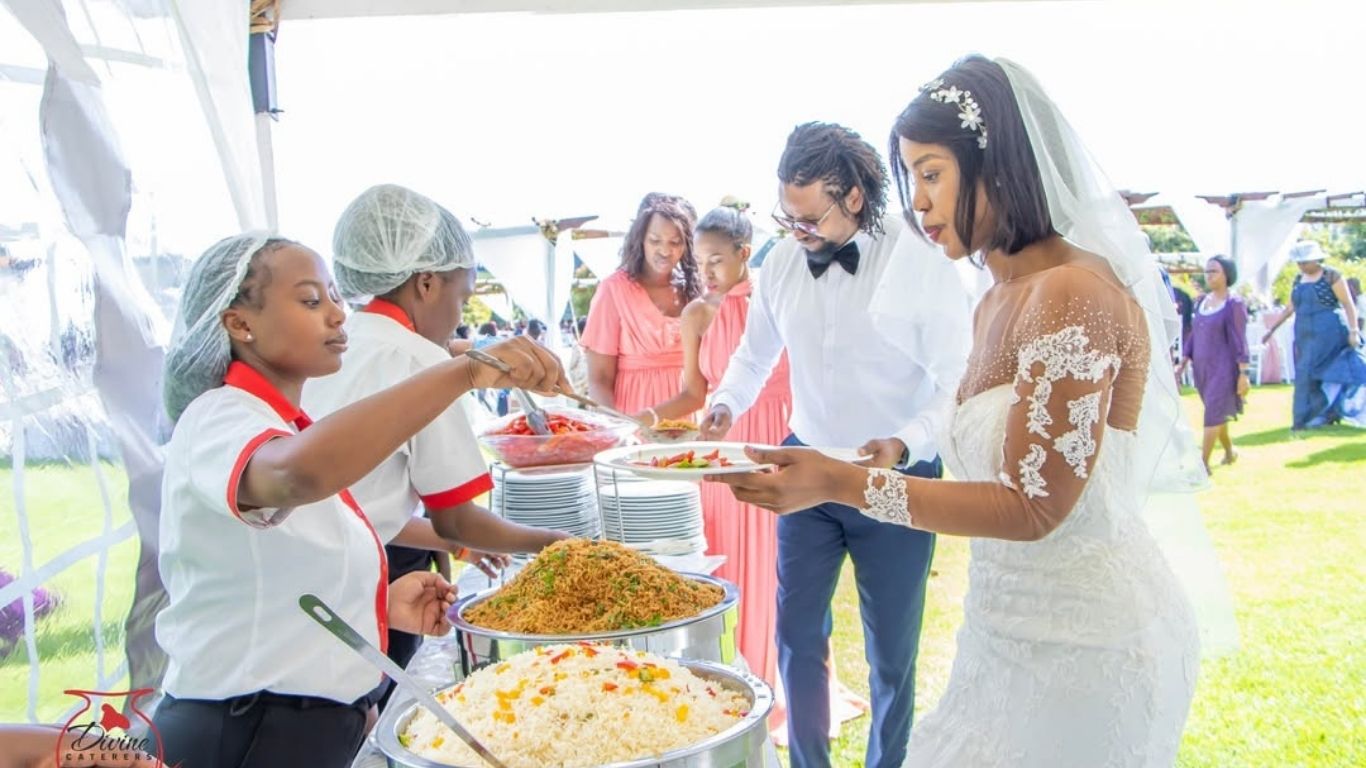
Kenyan weddings aren’t complete without the food. This guide walks you through the traditional dishes, today’s modern menu ideas, and how much catering services cost so you can plan with confidence.
Here’s the thing about Kenyan weddings: the music might set the mood and the outfits may steal a few gasps, but the food is what people talk about long after the day ends. Even before the couple walks in, guests are already thinking about what’s on the menu. Food is the heartbeat of Kenyan celebrations. It carries family history, community pride, and the small rituals that existed long before weddings became Pinterest-level productions.
Across the country, every community has a dish that instantly feels like home. From kimanga among the Taita to coastal pilau to a generous serving of mukimo at a Kikuyu wedding, these meals carry memory and meaning. Salima Bertoglio of Kwa Moyo Weddings once explained in an interview with TheKnot that dishes like kimanga aren’t just served—they’re passed down with pride, laughter, and rituals. In some traditions, elders pour a bit of drink on the ground to honor ancestors. In others, the couple shares a piece of meat instead of cake as a symbol of unity. Even the drinks, Muratina, Busaa, fermented milk, carry stories of where people come from.
So when you plan a Kenyan wedding, you’re doing more than choosing dishes. You’re curating an experience. Let’s break down what that looks like, from the classics to the modern twists couples love today, and what those catering choices actually cost in Kenya right now.
Popular Dishes at Traditional Kenyan Weddings or Dowry Ceremonies
Traditional menus vary from community to community, but a few beloved dishes appear almost everywhere because they feel familiar, comforting, and festive.
1. Nyama Choma (Roast Meat)
Nyama choma is the heart of any feast. Goat or beef is slow-roasted over open coals with simple seasoning, letting the smoky flavor speak for itself. It’s always served with a scoop of kachumbari (a raw onion-tomato-chili salad), and guests tend to gather here first.
2. Pilau (Spiced Rice)
Fragrant, warm, and full of Swahili character, pilau is cooked in a spiced broth with beef or goat, onions, garlic, and aromatics like cardamom and cinnamon. It’s elegant enough for a luxury wedding but familiar enough for a village ceremony. A little kachumbari on the side completes the plate.
3. Chapati (Flatbread)
Soft, layered, and slightly rich, chapati is a guaranteed crowd-pleaser. It pairs well with lentils, stews, vegetables, or chicken. At weddings, this station stays busy from start to finish.
4. Mukimo (Mashed Potatoes with Maize and Greens)
A staple in central Kenya, especially among Kikuyu communities, mukimo blends potatoes, green maize, beans, and pumpkin leaves into a colorful, filling side. It sits well next to stews or grilled meats and adds a touch of central Kenya to the menu.
5. Ugali (Maize Meal)
Simple but symbolic, ugali shows respect for tradition and elders. Made from maize flour and water, it’s dense, satisfying, and perfect with almost any stew or vegetable dish.
6. Sukuma Wiki (Collard Greens)
Often served alongside ugali (maize meal), sukuma wiki is sautéed collard greens cooked with onions and tomatoes. It’s earthy, nourishing, and a constant presence at Kenyan family events.
7. Samaki wa Kupaka (Coconut Fish)
A coastal favorite: grilled fish coated in a rich coconut sauce. Creamy, smoky, and full of Swahili spice, it brings a unique depth to the buffet.
8. Kenyan Chai (Spiced Tea)
Strong black tea brewed with milk, sugar, and sometimes ginger or cardamom. It’s less of a drink and more of a ritual, served throughout the event.
9. Kuku Paka
Tender chicken simmered in a smoky, coconut-based curry. Flavorful without being too heavy, it’s another coastal gem that’s become popular at modern weddings.
10. Githeri (Maize and Beans)
Simple, wholesome, and loved across the country. Githeri is cooked from maize and beans, then simmered with onions, tomatoes, and mild spices. It’s a great vegetarian option with strong Kikuyu roots.
11. Kachumbari
Fresh and bright, kachumbari cuts through all the heavier dishes. Onions, tomatoes, chili, cilantro, and lemon juice come together to make a crisp, refreshing salad that pairs with everything from pilau to nyama choma.
12. Mandazi (Doughnut)
Mandazi is Kenya’s version of sweet fried bread, similar to a doughnut but less sugary and more spiced. This version highlights its flavors: a fried, slightly sweet bread made with coconut milk, cardamom, or nutmeg. It’s golden, fluffy, and always a hit next to hot chai.
13. Viazi Karai
Coastal-style potatoes dipped in a turmeric batter and fried until crisp. They add color and crunch to the table and usually disappear fast.
14. Matoke
A Western Kenyan classic (common among the Kisii and Luo communities) made from boiled green bananas stewed with tomatoes, onions, garlic, and sometimes meat. It’s naturally creamy and comforting.
15. Samosas
Thin, triangular pastries filled with spiced meat or vegetables, then fried until crisp. Kenyan samosas tend to be spicier and meatier than the Indian version. They’re a reliable snack for all ages.
16. Matumbo (Tripe Stew)
Slow-cooked beef tripe simmered in tomatoes, onions, and spices. It’s a Kenyan delicacy, often served with ugali or chapati.
17. Irio (Mashed Peas and Potatoes)
Another Kikuyu staple: mashed potatoes combined with peas, corn, and sometimes spinach. Light, creamy, and perfect with grilled meats.
18. Omena (Silverfish)
Tiny silverfish from Lake Victoria, usually sun-dried and fried with tomatoes, onions, and garlic. Crunchy, savory, and packed with protein. Best enjoyed with ugali.
19. Bhajia
Thinly sliced potatoes dipped in a gram-flour batter and fried until crisp. Popular along the coast and often served with tamarind sauce.
20. Fried Tilapia
A lakeside classic. The whole fish is seasoned and deep-fried until golden, then served with ugali, sukuma wiki, and kachumbari. Crunchy skin, tender flesh—simple and satisfying.
21. Ndengu (Green Gram Stew)
A gentle, protein-rich stew made from green grams cooked with tomatoes, onions, and garlic. It pairs well with rice, chapati, or ugali and is a favorite among vegetarian guests.
Core Traditional Foods Served at Kenyan Weddings
Traditional wedding food isn’t random—it’s symbolic. Every community brings dishes that tie the couple to culture, ancestry, and family identity.
Dishes tied to specific communities
- Kikuyu: Mukimo, irio, kienyeji chicken
- Luo: Tilapia (fried or grilled), traditional greens
- Luhya: Ugali, ingoho, busaa
- Kalenjin: Mursik, roasted meats, grains
- Swahili Coast: Pilau, biryani, samaki wa kupaka
- Maasai: Roasted meats, milk-based dishes
These meals represent unity, abundance, respect for elders, and the pride of sharing home flavors.
Staples across all communities
Pilau, chapati, mukimo, nyama choma, tilapia, githeri, ugali, kienyeji chicken, and biryani appear almost everywhere because they appeal to all tastes and serve large groups easily.
Traditional drinks
Many weddings feature mursik (fermented milk), dawa, hibiscus tea, or community-specific brews. They tie the whole menu back to Kenyan heritage.
Modern Kenyan Wedding Menu Ideas
Today’s Kenyan weddings blend heritage with creativity. Couples want food that nods to tradition but still feels fresh and stylish.
1. Fusion and contemporary menus
African flavors meet continental influences—pilau next to herb-roast chicken, chapati paired with creamy curries, or biryani alongside vegetable stir-fries.
2. Live cooking stations
Guests love watching chefs prepare chapati, nyama choma, crepes, fish fillets, or stir-fries in real time.
3. Dessert and snack bars
Think fruit towers, donut walls, chocolate fountains, mini pastries, and themed sweet tables.
4. Themed buffets
Coastal spreads, grill stations, vegetarian corners, Nigerian jollof stations—couples use these to bring personality into the menu.
5. Cocktail-style receptions
Light bites and canapés—sliders, samosas, chicken wings, stuffed mushrooms—for couples who prefer relaxed movement over long buffet lines.
6. Vegetarian/vegan-friendly options
Coconut beans, sautéed vegetables, githeri, spinach, fresh salads, and colorful fruit platters ensure everyone feels included.
7. Brunch or plated service
Some couples choose a refined plated experience or a morning brunch with pastries, eggs, sausages, roasted potatoes, and tea.
Contemporary Kenyan Comfort-food Menus
These usually include:
Fried rice, jollof rice, dry-fried or lemon-herb chicken, beef stew, butternut chapatis, spaghetti or pasta dishes, steamed nduma, beetroot, mixed greens, spinach, samosas, bhajia, and assorted fruit platters.
Catering Trends Shaping Kenyan Weddings Today
Kenyan wedding catering has moved far beyond simple buffet tables. Couples now aim for entire food experiences.
1. Luxury décor setups
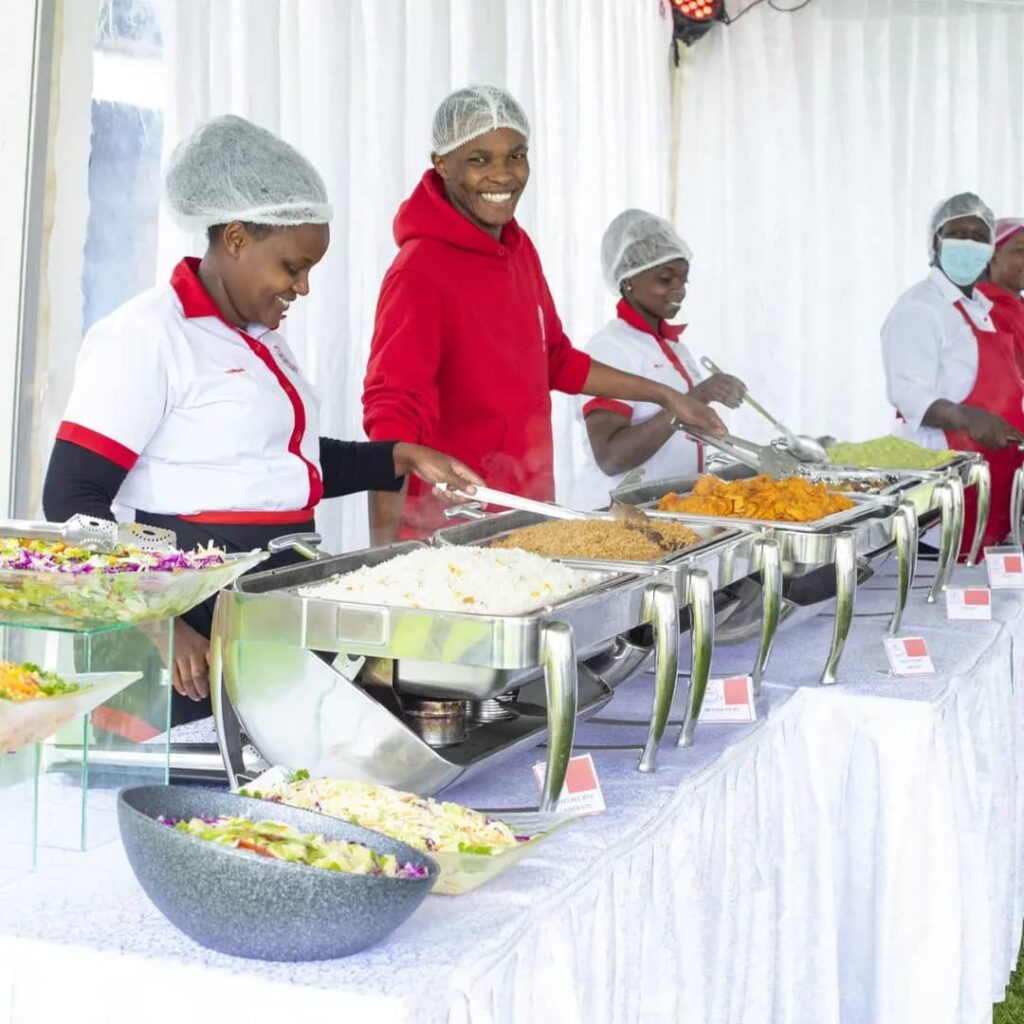
Catering teams curate food stations that match the wedding theme—styled warmers, coordinated linens, themed serving tables, and elegant stands.
2. Professional catering and private chefs
More couples are hiring chefs who bring restaurant-level food and presentation to weddings.
3. Bespoke menus
Menus now reflect the couple’s culture, families, or travels. Each course feels intentional.
4. Multiple package options
Budget, standard, premium, and luxury tiers let couples choose based on style, service, and guest count.
5. Elevated culinary experiences
Gourmet plating, interactive stations, chef-led demos, and curated tasting moments create a memorable dining experience.
Tips for Successful Catering at Kenyan Weddings
1. Respect cultural expectations
Every Kenyan community has its culinary identity. Luo weddings love their fish. The Luhya community might serve ingokho (traditional chicken). Kamba celebrations often feature mbuzi choma. Understanding what matters to the families makes the experience feel authentic.
2. Plan generous portions
Kenyan weddings are known for abundance. Guests expect to eat well and often go for seconds. Work with caterers who are used to serving large crowds without compromising quality.
3. Focus on presentation
Even the most traditional dishes can shine when displayed well. Organized buffets, clean warmers, traditional pots, and thoughtful plating elevate the overall feel.
4. Don’t forget dietary needs
Offer alternatives for vegetarians, elders, and health-conscious guests. Options like githeri, sautéed vegetables, ndengu, or fruit bowls go a long way.
5. Build an efficient service plan
Multiple serving points, labeled stations, and an experienced catering team help keep lines short and guests happy.
6. Consider traditional drinks
Alongside sodas and juices, couples are now including mursik, hibiscus tea, homemade herbal teas, or culturally significant brews for a personal touch.


How Much Does Wedding Catering Cost in Kenya?
Catering prices don’t follow a fixed rate. They change depending on the caterer, your menu, location, guest count, and whether the service comes as a full package (food, waitstaff, utensils, and buffet setup). Always ask for a breakdown before booking.
How much do Kenyan wedding caterers actually charge? Most caterers in Kenya fall between KES 1,000 and KES 3,500 per person for standard modern menus. Traditional, premium, or mixed menus may go higher.
To give you context:
- Simple traditional menu: around KES 1,000–1,500 per person
- Mixed modern and traditional menu: around KES 1,500–2,500 per person
- Premium buffet setups: KES 3,000+ per person
Real Figures From Known Caterers & Venues
Here’s a snapshot of real market pricing so you can compare:
- MGM Muthu Hotels:
Charges KES 200,000 for both their event spaces and other services, including catering. Breakdown of their packages is as follows:- Silver – KES 3,000 per person
- Gold – KES 3,500 per person
- Platinum – KES 4,500 per person
- The Garden Naivasha:
Charges KES 3,000–7,000 per person (grounds + food) - Panorama Hotel:
Charges KES 2,500 per person (food + grounds) - Jaza Resort:
Charges KES 20,000 (grounds only)—food outsourced
These figures help you anchor a realistic budget, but always confirm current rates because many venues adjust seasonally.
Final Thought
Food carries the mood of a Kenyan wedding. Guests might forget the speeches, but they won’t forget what they ate—or how it made them feel. Whether you lean heavily into tradition or mix it with modern flair, the goal is simple: serve meals that bring people together and reflect who you are as a couple.
Plan early, choose caterers who understand both culture and quality, and build a menu that feels like home. The rest will fall beautifully into place.