
Planning a civil wedding in Nigeria doesn’t have to be complicated. This ultimate guide walks you through everything you need to know, step by step.
Getting married in Nigeria usually comes with options and pressure. Traditional weddings involve families, rites, long guest lists, and extended timelines. White weddings come with venues, vendors, months of planning, and serious expenses. While these ceremonies are meaningful, not every couple wants the stress, cost, or long wait that often comes with them.
If you want a simple, legal, and stress-free way to get married, a Nigerian civil wedding is your best option. It allows couples to formalize their union without planning a full traditional or white wedding. You can still celebrate later if you choose, but your marriage is legally recognized from day one.
Under Nigerian law, statutory marriages are governed by the Marriage Act, CAP M6, Laws of the Federation of Nigeria (2004). The Ministry of Interior oversees these marriages, and the law recognizes two types: ordinary marriages between two Nigerians, and special marriages involving a Nigerian and a non-Nigerian, or two non-Nigerians marrying in Nigeria. Both follow the same legal structure, with slight differences in documentation and fees.
Civil weddings are conducted at government-approved marriage registries, either at the federal or local government level. The choice of registry can matter, especially if international recognition is important, but the legal process remains the same.
The good news is that getting married in Nigeria today is far easier than many people think. With proper preparation, a civil wedding can be completed smoothly and without unnecessary stress. It is affordable, legally sound, and provides a government-issued marriage certificate that is valid locally and internationally. This legal recognition protects both partners and any children from the marriage, and it is often required for visas, banking, name changes, and immigration.
You may hear the terms civil wedding and court wedding used interchangeably. In Nigeria, they generally mean the same thing. Both refer to a statutory marriage conducted under Nigerian law at a recognized registry. The key difference is not the location but the legal framework, unlike traditional marriages, which are rooted in custom rather than statute.
Benefits of a Civil Wedding in Nigeria
A civil wedding is not just the “simpler option.” For many couples, it is the smarter one. Compared to traditional and white weddings, a civil wedding removes many of the pressures that make marriage feel overwhelming before it even begins. It focuses on legality, clarity, and peace of mind, while still leaving room for celebration later if you choose.
Here’s why more Nigerian couples are choosing a civil wedding over other forms of marriage.
1. It is legally recognized everywhere
A civil wedding is conducted under Nigerian statutory law, which means your marriage is fully recognized by the government and internationally. The marriage certificate issued can be used for visas, immigration, name changes, banking, insurance, and official documentation. Traditional marriages alone do not offer this level of legal protection.
2. It costs significantly less
Traditional and white weddings often come with heavy expenses: venues, aso ebi, catering, décor, media teams, and family obligations. A civil wedding strips all that away. You pay mainly for documentation and the ceremony itself, making it one of the most affordable ways to get married in Nigeria.
3. It requires far less planning
Civil weddings do not demand months of coordination. There’s no need to book multiple vendors, manage guest lists, or coordinate outfits for extended family. Once your documents are ready and a date is booked, the process is straightforward and predictable.
4. It saves time and emotional energy
Planning Nigerian weddings can be emotionally draining, especially when families, traditions, and expectations collide. A civil wedding minimizes stress by keeping the focus on the couple and the legal union, not external pressure or cultural politics.
5. It gives couples full control
With a civil wedding, decisions stay between you and your partner. There is no obligation to meet cultural demands, invite large numbers of guests, or spend beyond your comfort level. This is especially helpful for inter-tribal couples or those navigating family disagreements.
6. It works perfectly as a wedding foundation
Many couples use a civil wedding as the first step, then plan a traditional or white wedding later when finances and timing allow. This ensures you are legally married while giving you the freedom to celebrate on your own terms in the future.
7. It is ideal for private and intimate couples
Not everyone wants a crowd. Civil weddings are perfect for couples who value privacy and intimacy. You can keep the ceremony small, meaningful, and calm, without turning it into a public spectacle.
8. It simplifies documentation for children and property
A civil marriage provides clear legal standing for children, inheritance, and property ownership. This clarity is important for long-term planning and avoids legal complications that can arise from informal or customary unions.
9. It is inclusive and flexible
Civil weddings accommodate Nigerians marrying foreigners and non-Nigerians marrying in Nigeria. The process is structured to handle both ordinary and special marriages without cultural restrictions.
10. It allows you to focus on the marriage, not just the wedding
At its core, a civil wedding centers on the commitment itself. Without the noise of elaborate planning, couples often feel more grounded, present, and emotionally connected during the process.

Requirements for a Nigerian Court Wedding
Before you step into any marriage registry in Nigeria, documentation comes first. Court weddings are simple, but they are also strictly procedural. Missing or incorrect documents are the fastest way to delay your plans. Once you understand what is required and prepare ahead, the process becomes smooth and predictable.
The good news is that most of these requirements are standard legal documents that you may already have or can easily obtain.
Basic Requirements for Both Partners
These apply whether you are having an ordinary marriage (between Nigerians) or a special marriage.
- Birth Certificate or Declaration of Age
Issued by a recognized authority or court. This confirms that both parties are of marriageable age. - Valid Government-Issued ID
National ID (NIN slip or card), International Passport, Driver’s License, or Voter’s Card. - Passport Photographs
Usually, two recent passport-sized photos per person. Some registries may request more. - Sworn Affidavit of Bachelorhood or Spinsterhood
This confirms that neither party is currently married under Nigerian law. - Marriage Notice Form
This form is completed at the registry and officially declares your intention to marry. - Proof of Address
A utility bill, bank statement, or tenancy agreement may be requested, depending on the registry.
Additional Requirements (If Applicable)
These apply only if one or both partners have been married before or have special circumstances.
- Divorce Documents
Decree Nisi and Decree Absolute for divorced applicants. - Death Certificate of Former Spouse
Required for widows or widowers. - Court Annulment Documents
If a previous marriage was annulled. - Affidavit of Single Parent Status
Required if you are single with one or more children. - Parental Consent Letter
Required if either party is under 21 years old.
Once your documents are complete and verified, you can move confidently into the official process of getting married at the registry.
@authentic_traveling The legal federal way to get married in Nigeria is very interesting #nigeria #marriage #lagos #nigerianwedding ♬ original sound – Chris – Authentic Traveling
Step-by-Step Process for a Nigerian Court Wedding
A Nigerian court wedding follows a clear legal sequence. There are no surprises if you understand the steps and follow them in order. From choosing a registry to walking out legally married, the process is structured to protect both parties and the state.
Step 1: Choose the Right Marriage Registry
In Nigeria, court weddings are conducted at approved marriage registries. Your choice here matters, especially if you plan to use your marriage certificate outside Nigeria.
- Federal Marriage Registry
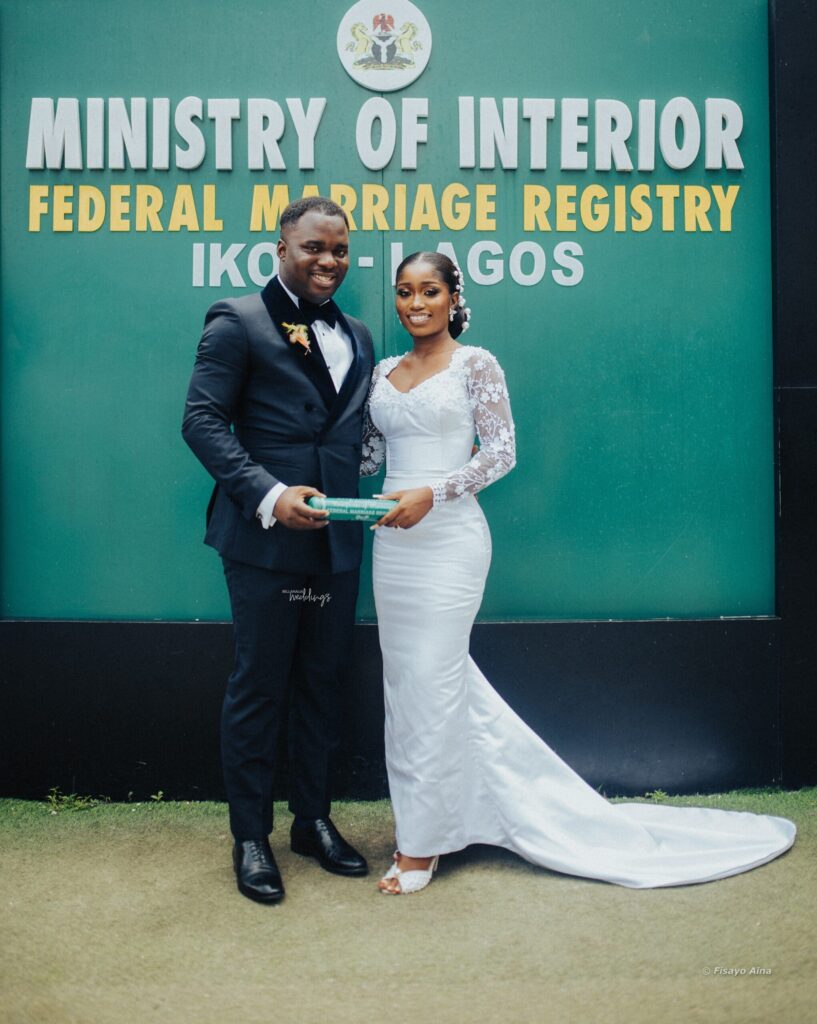
Found in cities like Ikoyi (Lagos), Abuja, and Port Harcourt. Certificates issued here are widely accepted internationally and are often preferred for immigration and visa purposes. - Local Government Marriage Registry
Available in most local government areas. While legally valid in Nigeria, some foreign institutions may request additional authentication.
If international use is part of your plans, a federal registry is usually the safer option.
Step 2: File a Notice of Marriage
This is the official declaration that you intend to marry.
- Visit your chosen registry together to complete the Notice of Marriage form.
- Submit your documents for preliminary review.
- Pay the required filing fee, which varies by registry.
- Your notice is displayed publicly for the statutory waiting period, typically 21 days, to allow for objections.
Step 3: Verification and Registrar Interview
After the notice period expires:
- Return to the registry for verification.
- The registrar confirms that no objections were raised.
- Documents are reviewed again for accuracy and completeness.
- Once cleared, a date is fixed for your court wedding ceremony.
Some registries may combine verification and scheduling on the same day.
Step 4: Attend the Court Wedding Ceremony
This is the formal moment your marriage becomes legal.
- Both partners must be physically present.
- Bring two adult witnesses, usually one from each side.
- The registrar conducts a short ceremony explaining the legal meaning of marriage.
- You exchange consent, sign the marriage register, and the witnesses sign as well.
- The registrar officially pronounces you married.
The ceremony is brief, calm, and focused on legal consent rather than performance.
Step 5: Collect Your Marriage Certificate
Immediately after the ceremony:
- Your marriage certificate is issued.
- You may request extra certified copies for official use.
- Keep the certificate safe, as it is your primary legal proof of marriage.
At this point, your civil marriage is complete and fully recognized under Nigerian law.

Court Wedding Checklist in Nigeria
If you like structure, this is your safety net. A court wedding may be simple, but it still follows a legal sequence. This checklist helps you move from decision to certificate without confusion, missed steps, or last-minute stress. Whether you’re doing only a civil wedding or combining it with traditional or religious ceremonies, use this as your grounding point.
1. Choose the Marriage Registry
Start by deciding where your court wedding will take place.
- Pick a registry that is convenient for both partners.
- Decide between a Federal Marriage Registry and a Local Government registry, especially if you’ll need the certificate for international use.
- Check if the registry allows online pre-registration or requires in-person visits only.
2. Confirm Legal Eligibility
Before submitting anything, make sure you qualify under Nigerian law.
- Both partners must be legally single and of marriageable age.
- You must not be married to another person under statutory law.
- Confirm that you can provide two adult witnesses for the ceremony.
3. File Your Notice of Marriage
This is the formal declaration of your intention to marry.
- Visit the registry together to complete the Notice of Marriage form.
- Submit basic identification and photographs.
- Pay the required filing fee as directed by the registry.
- Your notice will be displayed publicly for the statutory waiting period.
4. Prepare and Organize All Documents
This step determines how fast or slow your process will be.
- Birth certificates or sworn age declarations.
- Valid government-issued IDs for both partners.
- Passport photographs.
- Supporting documents for divorce, widowhood, or annulment, if applicable.
- Parental consent letters, if required.
- Identification for your two witnesses.
5. Budget and Pay Registry Fees
Court wedding costs vary, so confirm early.
- Pay all required application and ceremony fees.
- Ask about the cost of certified copies of the marriage certificate.
- Keep receipts and payment confirmations safe.
6. Schedule Your Court Wedding Date
Once your notice period and verification are complete:
- Select an available ceremony date with the registry.
- Confirm your witnesses can attend on that date.
- Ask if same-day ceremonies are possible or if a waiting period applies.
7. Attend Any Required Briefings or Counseling
Some registries include short sessions on marital rights and responsibilities.
- Attendance may be optional or encouraged depending on the location.
- These sessions are especially useful for first-time couples.
8. Attend the Court Wedding Ceremony
This is the legal heart of the process.
- Arrive early with your documents, witnesses, and identification.
- The registrar conducts a brief legal ceremony.
- Both partners and witnesses sign the marriage register.
- The marriage is officially declared valid under Nigerian law.
9. Collect and Secure Your Marriage Certificate
Your certificate is your legal proof of marriage.
- Collect it immediately after the ceremony.
- Request extra certified copies if needed for official use.
- Store the original safely; replacing it later can be stressful.
10. Decide on Any Add-Ons
A court wedding doesn’t limit your options.
- Combine it with a traditional, religious, or reception ceremony if desired.
- Plan a simple photo session at the registry or afterward.
- Ensure all cultural or family ceremonies align smoothly with your legal wedding date.
With this checklist, nothing slips through the cracks. Up next, we’ll look at what to wear for a Nigerian court wedding so you show up confident, comfortable, and appropriately dressed.
What to Wear for a Nigerian Court Wedding
While there’s no official dress code, simplicity and elegance are key:
Brides:
- Short or midi dresses
- Jumpsuits or skirt suits
- Traditional fabrics like lace, Ankara, or Aso-Oke
Grooms:
- Formal suits or blazers
- Native wear (Senator, Agbada, or Kaftan)
- Smart casual attire if preferred
Tip: Wear comfortable shoes, as registries may involve waiting.

Cost of Court Wedding in Nigeria
Planning a court wedding is much more affordable than a traditional or white wedding, but it’s still important to budget for official fees, document processing, and minor miscellaneous expenses. Costs can vary depending on the registry location, type of marriage, and any optional services you choose.
Approximate Costs:
- Ordinary Marriage Application: ₦75,000
- Special Marriage Application: ₦100,000
- Document Verification: ₦50,000
- Certified True Copy of Marriage Certificate: ₦50,000
- Change of Venue Request: ₦150,000 (per the Federal Ministry of Interior’s official website)
Typical Breakdown by Step:
- Filing of Marriage Notice: ₦15,000 – ₦25,000
- Affidavit of Bachelor/Spinster Status: ₦2,000 – ₦5,000
- Swearing of Oath at the Court: ₦1,000 – ₦3,000
- Marriage Certificate Issuance: ₦10,000 – ₦20,000
- Miscellaneous (photocopies, transport, minor administrative costs): ₦5,000 – ₦10,000
Total Estimated Cost: ₦30,000 – ₦60,000
Tip: Always confirm current fees directly with your chosen registry, as rates may change without notice. Planning for these costs ensures there are no last-minute surprises and keeps your civil wedding stress-free.

The Dos and Don’ts of a Nigerian Court Wedding
A civil wedding is straightforward, but paying attention to the details can save you from unnecessary stress. Here’s a practical guide to help you navigate your court wedding smoothly.
Do’s:
- Arrive early: Get to the registry at least 30–45 minutes before your scheduled time to handle any last-minute checks.
- Double-check your documents: Ensure all IDs, birth certificates, affidavits, and previous marriage documents (if applicable) are complete and valid.
- Bring witnesses with valid IDs: At least two witnesses are required; make sure they have proper identification.
- Plan for name changes: If either partner intends to change their surname, gather the necessary forms and identification to update official records afterward.
- Confirm payment receipts: Keep all receipts for fees paid, as some registries may request them during processing.
Don’ts:
- Don’t skip the 21-day notice: The law requires this notice period; you can’t legally bypass it.
- Don’t schedule conflicting events: The process may take longer than expected, so avoid booking other major events on the same day.
- Don’t forget your marriage certificate: Ensure you receive the official certificate before leaving the registry; it’s your proof of legal marriage.
- Don’t assume informal arrangements are enough: Everything must be done according to the registry’s procedure—no shortcuts.
- Avoid incomplete applications: Missing documents or signatures can delay or even cancel your ceremony.
@jadeite_imperial The civil wedding of Nigeria's . Gospel & Nigeria's fashion designer #wedding #nigerianwedding #celebritywedding #fypシ #viral #ghanatiktok🇬🇭 #nigeriantiktok🇳🇬 ♬ See What the Lord Has Done (Live) – NATHANIEL BASSEY
What to Do After Your Court Wedding
After the ceremony, your union is legally recognized, but there are still practical steps to secure your marriage and celebrate your day:
- Plan a celebration (optional): Some couples host a small reception, party, or dinner, while others head straight for a honeymoon or personal getaway.
- Update official documents: If you’re changing your name, update your passport, bank accounts, National ID (NIN), driver’s license, and other legal records.
- Make certified copies of your marriage certificate: Store them safely; you’ll need them for banking, immigration, or property matters.
- Inform family and close friends: Share the news officially and provide copies of the certificate if needed for cultural or personal purposes.
- Keep a digital backup: Scan your marriage certificate and store it securely for easy access.
Final Thoughts
A Nigerian court wedding is the easiest, most affordable, and legally recognized way to formalize your union. By understanding the requirements, following the checklist, and preparing in advance, you can avoid common pitfalls and complete the process stress-free.
Whether you combine it with a traditional ceremony, a white wedding, or simply keep it intimate, a civil wedding gives you the legal foundation to start your married life confidently. With proper planning, attention to detail, and a clear understanding of the process, your court wedding can be simple, smooth, and memorable.
Frequently Asked Questions (FAQs)
Q1: Can we do a court wedding without a traditional one?
A: Yes. A traditional wedding is optional; a court wedding alone is legally valid.
Q2: How long does the process take?
A: The minimum is 21 days due to the marriage notice period, but scheduling may extend it to 4–6 weeks.
Q3: Can foreigners marry a Nigerian in court?
A: Yes. The foreigner must provide a valid passport, a visa page, an affidavit of single status, and embassy consent if required.
Q4: Can a court wedding be done in one day?
A: Only if all documents are ready and the registry allows same-day ceremonies, which is rare.
Q5: Is the marriage certificate internationally recognized?
A: Yes. Certificates from federal registries are valid both locally and internationally.
Q6: Can we have a church or traditional wedding after a court wedding?
A: Absolutely. A court wedding does not prevent additional ceremonies later.
Q7: Can I change my name after the wedding?
A: Yes. You must publish a name change affidavit in a national newspaper and update your official documents.
Q8: How do I start the registration process for a special marriage?
A: Visit a Federal Marriage Registry, fill out the special marriage forms, submit required documents, and pay the prescribed fees.
Q9: Do we need witnesses for a court wedding?
A: Yes. At least two witnesses are required, one from each side, and they must have valid identification.
Q10: What happens if someone objects during the marriage notice period?
A: The registry will investigate the objection before approving the wedding. If valid, the ceremony may be delayed until the issue is resolved.